

Panellists:
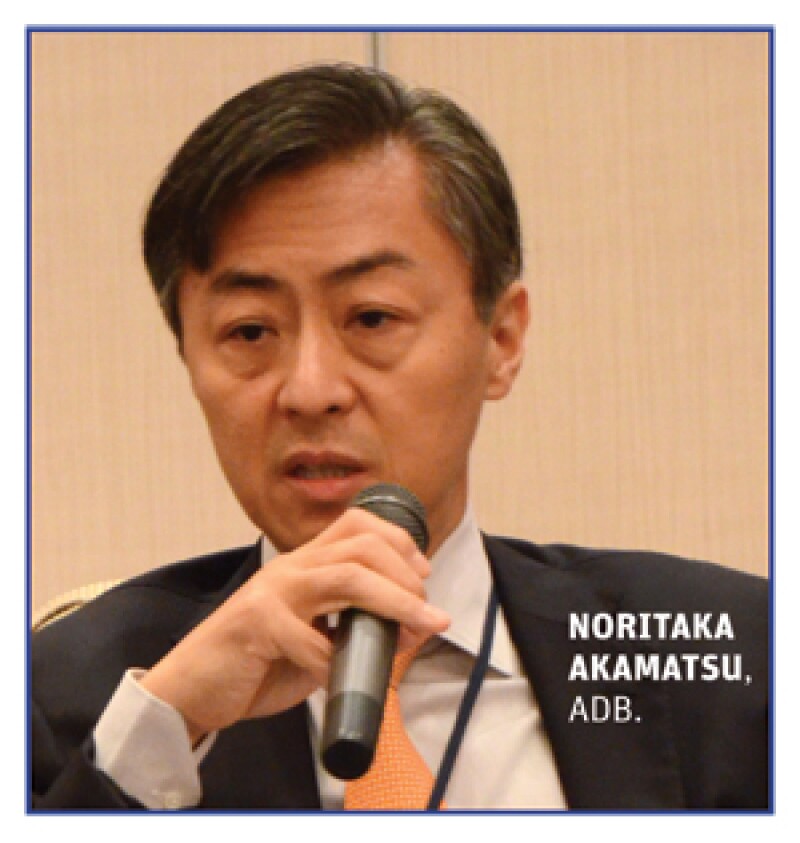
Noritaka Akamatsu, deputy head, Office of Regional Economic Integration, Asian Development Bank
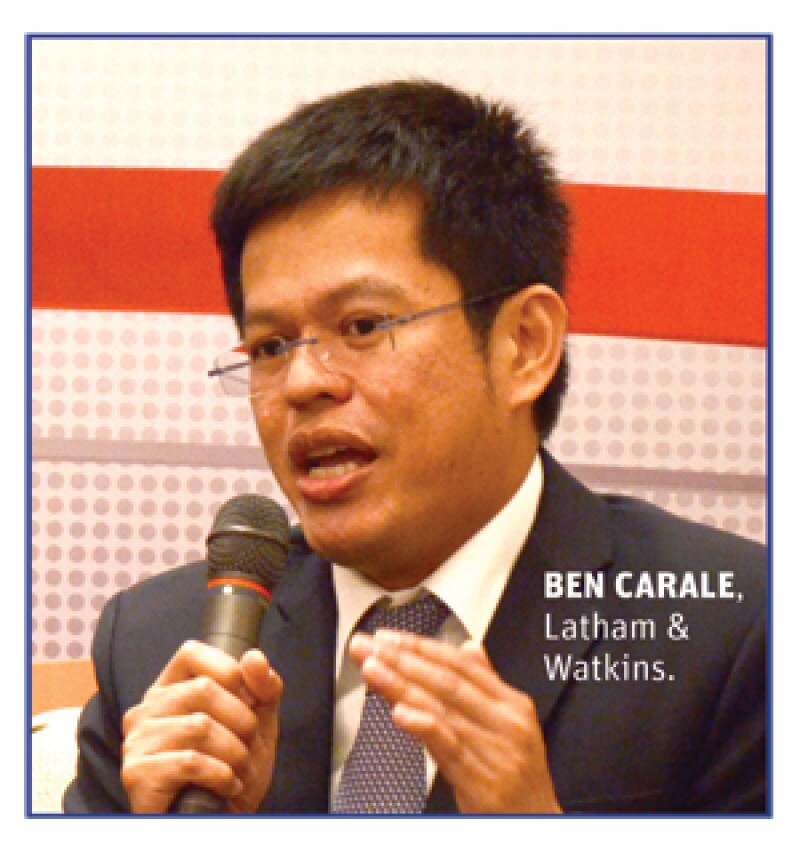
Ben Carale, lawyer, Latham & Watkins
Cesar Crisol, chief executive, PDS Group
Sergio Edeza, treasurer, San Miguel
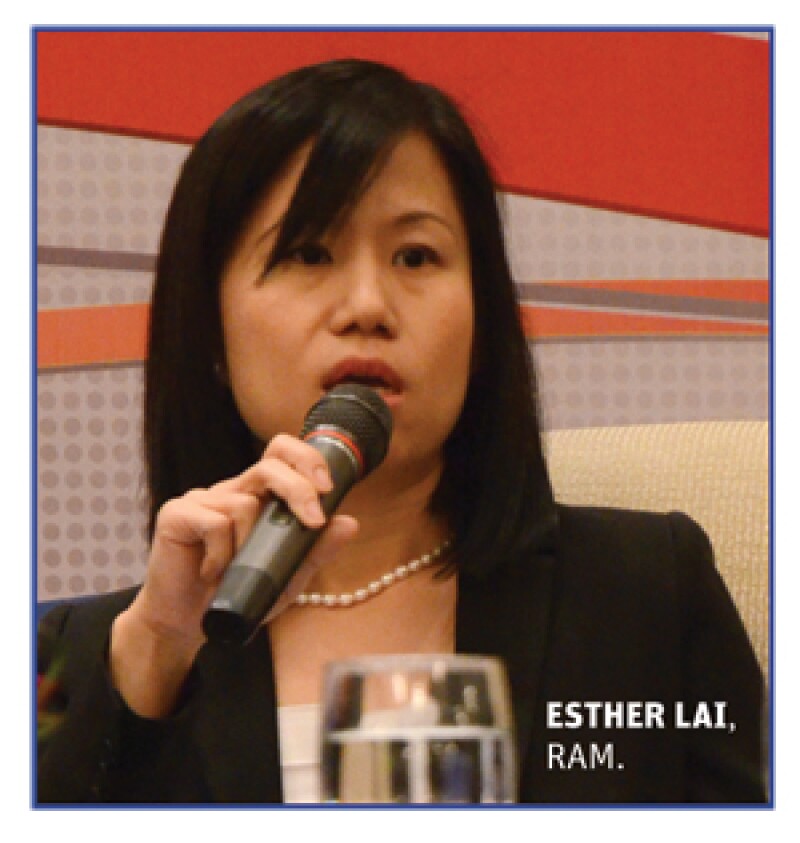
Esther Lai, head of sovereign ratings, RAM Rating Services
Dennis Montecillo, president, BPI Capital Corp.
Kiyoshi Nishimura, chief executive, CGIF
Hans Sicat, president and chief executive, Philippine Stock Exchange (PSE)
Jose Sio, chief financial officer, SM Investments
Jimmy Ysmael, senior vice president, Ayala Land
Moderator: Matthew Thomas, contributing editor, Asiamoney
Asiamoney (AM): How does the Philippine debt market compare to its peers in the Asean (Association of Southeast Asian Nations) region? And what is the next step to push development forward?
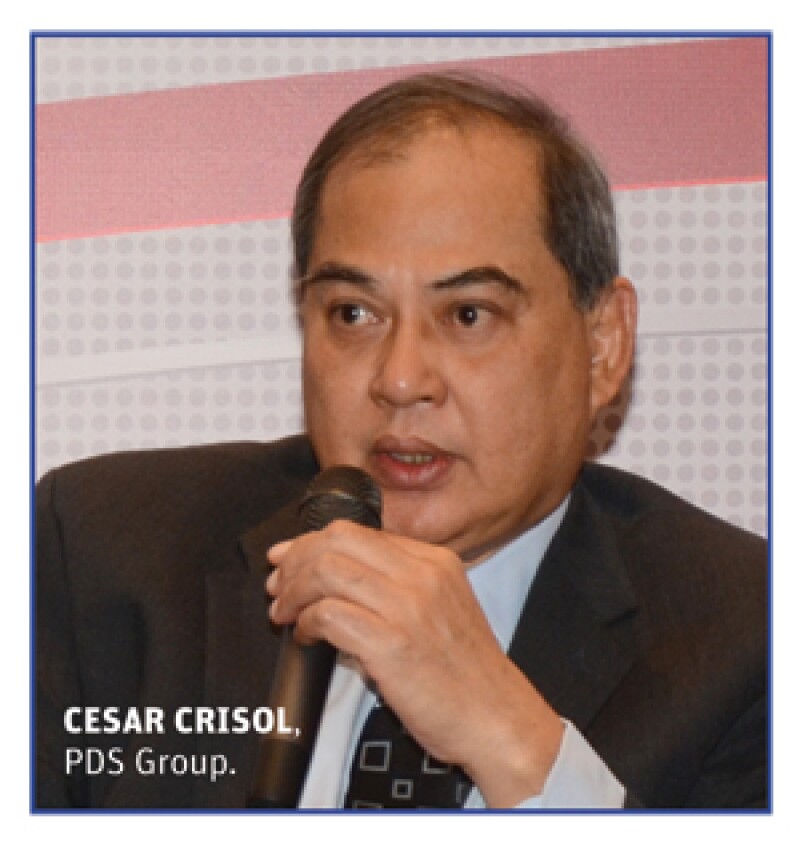
Cesar Crisol, PDS Group: At this point, we're still at a very nascent stage compared to our peers in the Asean region. You need only look at the ADB study of March 2014 — out of the Asean+3 countries, our bond market is at about number seven with a total value of about $98bn as of the first quarter of 2014.
The good news is that as more projects come into place, and as Basel III gets implemented in the banking industry, there will be a bigger move towards tapping the capital markets to ease the credit limits on banks. In the coming months there will be a considerable number of issuers tapping the bond markets, which is being helped by the fact that interest rates are at historic lows. For investors, there are probably no better alternatives then going to corporate bonds.
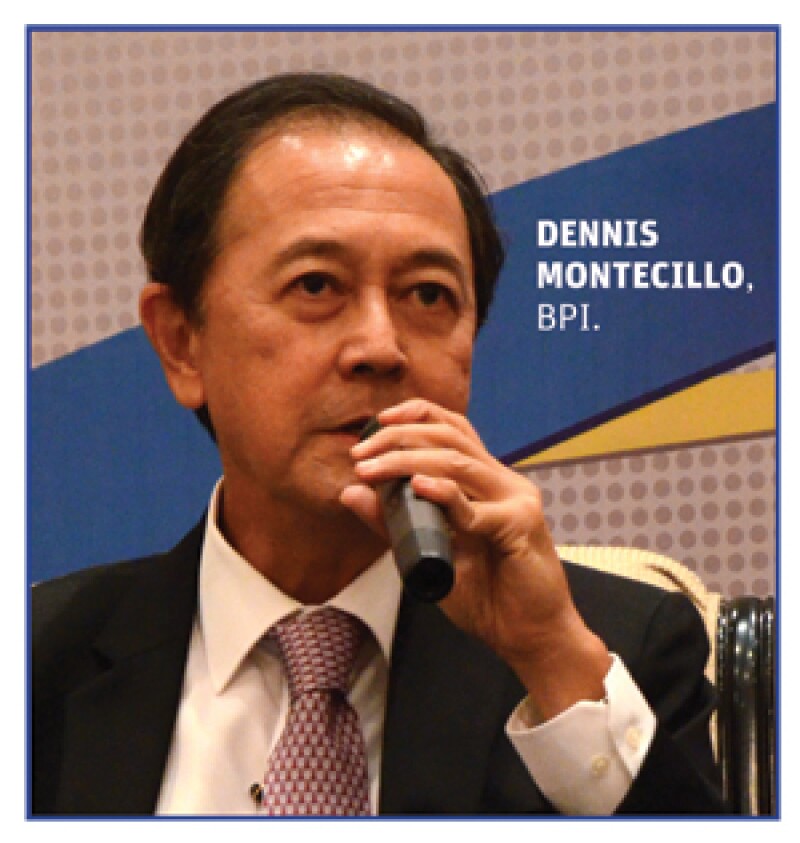
Dennis Montecillo, BPI: I think, for starters, conferences like this contribute greatly to the education of the local market in terms of making issuers aware that there are alternatives to more conventional sources of financing.
For those of us who are old enough to remember the development of the high yield market in the 1990s, this is how it started — you had a high concentration of issuers, as we do at the moment. In our case, about 90% of the corporate bond market is represented by the top 10 issuers. A little bit of patience is warranted.
The size of individual issues is a key element in developing the bond market. The intersection of bond markets and infrastructure funding requirements in this country could very well be a tipping point, because as the needs of the issuers grow, the sizes grow, the liquidity grows, and these things tend to build on each other.
As issuers and investors both get more sophisticated, I would say that the development of a credit spread curve would be a way to raise more awareness. Today, irrespective of duration, typically the spreads investors are willing to accept for an issuer tend to remain constant. But you're going to see people start discriminating more between different durations and then between different credits, which will be the beginning of high yield credits and unrated credits. Then the whole trade-off between risk and return starts to make more sense for investors.
It's certainly an early stage, but I would wager than you're going to see the bond market growing many times over in the next few years. As of May of this year, we had already surpassed overall issuance last year in the corporate bond market, and our current forecast is that by the end of this year we may be at 2.25 times where we were last year. It is starting from a small base, certainly, but we're headed in the right direction.
Crisol, PDS Group: We still need to encourage more issuers to tap the bond market. But as Dennis mentioned, when they come to the market, we need bigger issue sizes. Right now, corporate bonds tend to be limited in size. That does not create the liquidity that is desired by market participants. Simply by increasing the benchmark size we can create more liquidity, as dealers are able to trade more frequently in a security. That is a very important change the market needs to take.
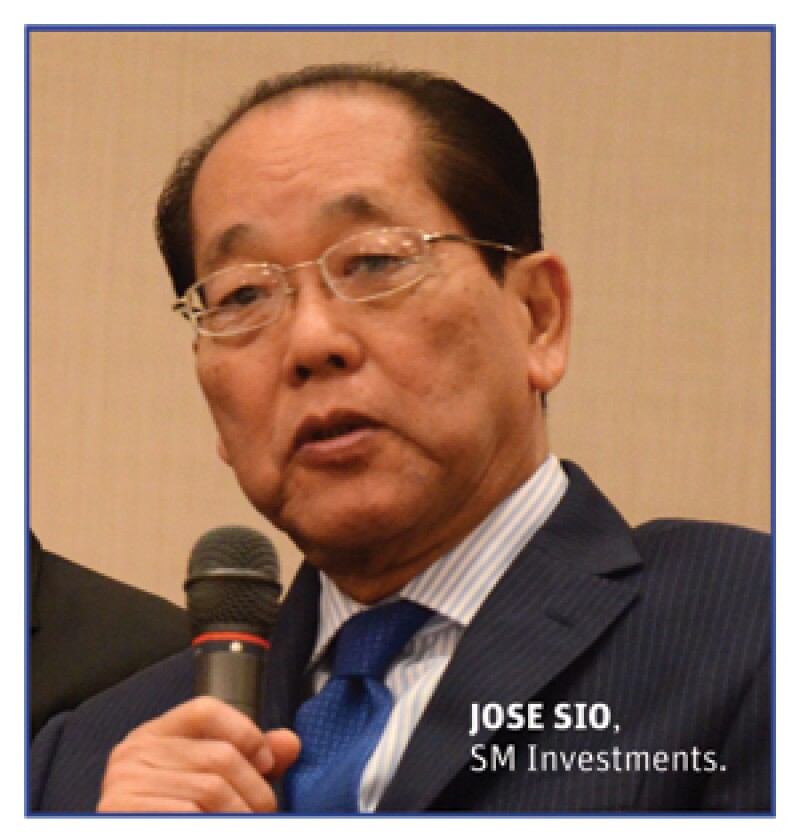
Jose Sio, SM Investments: Most of our revenues are in peso, so it makes a lot more sense for us to issue peso bonds rather than issuing a dollar bond where the interest differential is not compelling enough to reward you for the exchange rate exposure. But there are constraints for us in selling bonds in the domestic market.
We have budgeted Ps40bn ($912.51m) of peso retail bonds this year, and we cannot do more, because in our banking system, there is a law that limits the exposure of banks to a particular company: the single borrower limit. That limits the growth of the local peso bond market.
The withholding tax on bond interest is another area of concern. In the case of foreign investors, the withholding tax rate can be as high as 25%. This discourages foreign investors from investing in bond issued by Philippine corporations.
The time it takes to issue a registered peso bond — one that can be sold to retail investors — is another problem. It can take three to four months, which means the risk is just too much. That is why some issuers have a tendency to look to the dollar bond market, where it requires less time to issue dollar bond.
The other factor is that some investing public is not yet in tune to buying bonds. They are more in tune with buying shares. It is up to us, I guess, to educate the public that investing is not just equities, but it is also in bond investments.
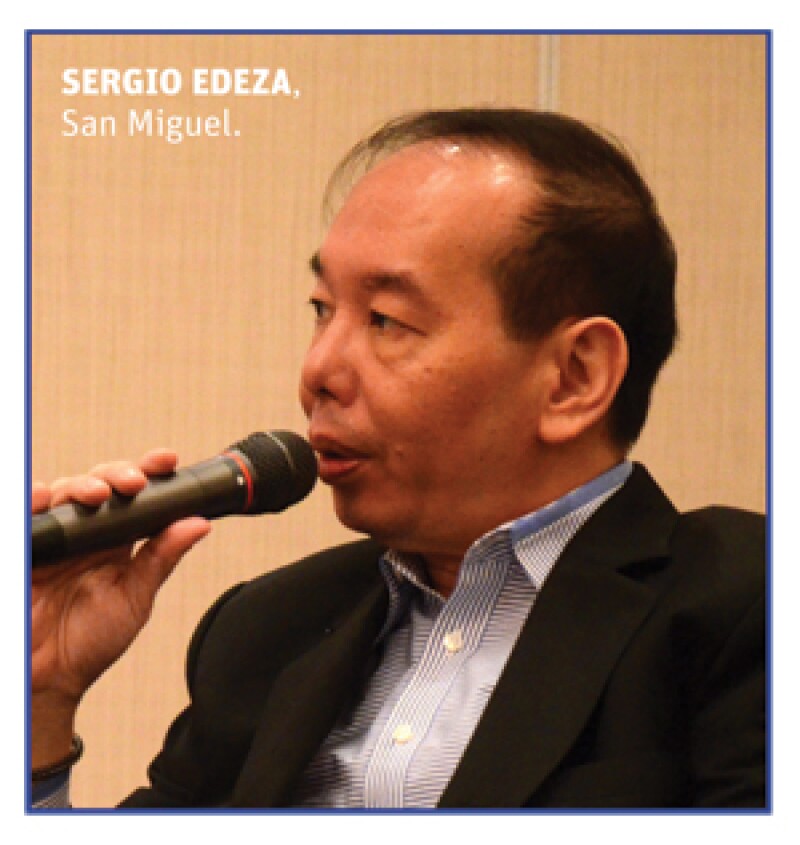
Sergio Edeza, San Miguel: I agree fully. We do have a regulatory disconnect. If you're a local company, you would rather issue in the local currency, but the market is not really there because of regulatory constraints. My view is that capital formation must not be taxed.
Registration of retail bonds takes so long, but not only that — it also needs to be fully underwritten. But if banks underwrite, they are constrained by the single borrowing limit. This is why most of the bonds that are being issued are small. We used to be able to issue Ps30bn, but now we can only find a market for around Ps15bn, because it's going to be very difficult for the banks to unload this to the public in the 30-day period they are given by the authorities.
Educating the investment public is really something we have to work on. They are always looking for very short-term investments — 30 days, 60 days, and up to a year. How do you reconcile that with the need for companies to secure longer-term financing? It would be very expensive for us to issue five year or 10 year bonds.
It was, however, very good to hear treasurer De Leon [in a pre-panel speech] say they were looking to develop the repo market. That is very much welcome, because it will make the public more comfortable buying longer-term bonds.
Jimmy Ysmael, Ayala Land: One of the problems I see is the limitation on non-listed entities tapping the market. There was a test case recently of an unlisted company that tried tapping the market [Manila North Tollways Corp]. We tried it ourselves with two of our mature subsidiaries last year but ran into some problems on the regulatory front. If the government can be more open-minded on allowing these types of issuances, that would increase the supply. For us, as a real estate company, it is a very efficient way of diversifying our funding sources given the single borrowing limits you find in the loan market.
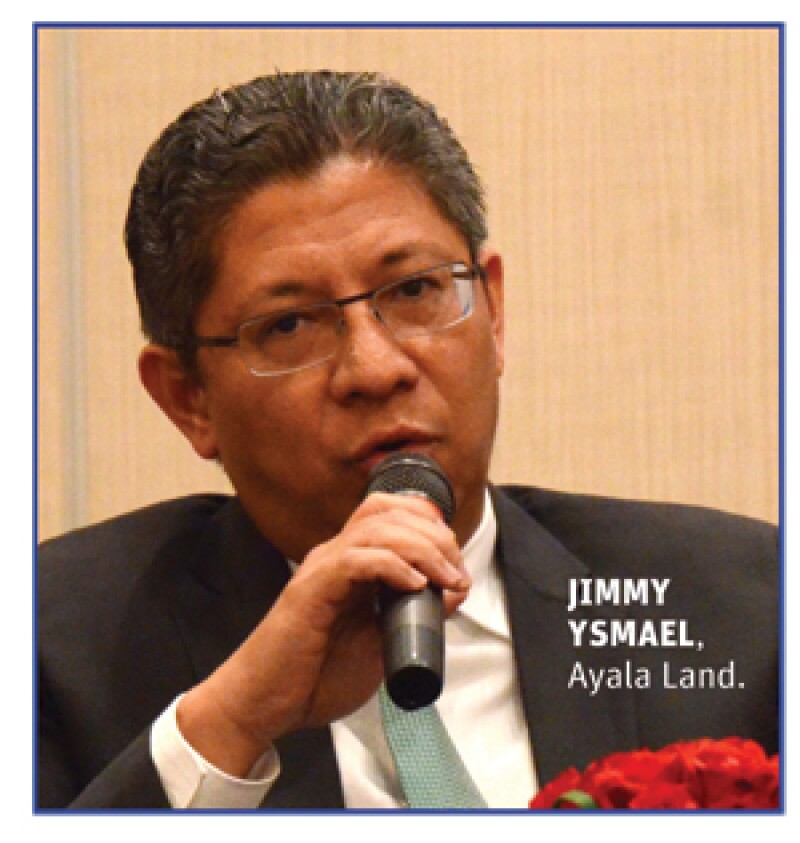
The single borrower limits are effectively forcing companies — especially real estate companies — to tap the bond market. It makes sense, but the Philippines is still at an early stage in terms of financial maturity. The liquidity is not wanting, it is just a matter of channelling that to this particular instrument.
Ben Carale, Latham & Watkins: One major problem I see is that Philippine bonds pretty much track the loan market in terms of covenants, even those issued in the US dollar market. This is something we have been trying to discuss with market participants: there is a fundamental difference between loans and bonds.
It is pretty easy to get a covenant waiver if you only have to talk to five bank lenders, but in the bond market, it is very difficult, and sometimes very expensive. Unfortunately, about 28% of US dollar bonds sold by Philippine issuers still have maintenance covenants, and 100% of local bonds have maintenance covenants. This is a major issue that local corporations need to understand.
Kiyoshi Nishimura, CGIF: The Philippines' corporate bond market is growing rapidly, but we must bear in mind that it started from a low base, and the market is still only about 10% of the size of Malaysia's bond market, which is the largest bond market in the region. But, more importantly, relative to GDP, the Philippines' corporate bond market is only about 5% of the size of the economy.

The biggest problem is perhaps that there are only around 30 issuers in the domestic market, and these belong to about seven or eight conglomerates. There are many companies that do not have access to the bond market. One of the things that CGIF is trying to do is bring some of new names to the market. This is not just important for the issuers, but for investors, who need more diversified investment opportunities.
The Philippines corporate bond market is largely based on retail investment, which differs from other markets in the Asean region. The nature of the market would change if institutional investors played a more important role, so bringing in new investors is very important.
Hans Sicat, PSE: We do not need to be patient with these changes. Today, we're in the position where one asks, do you need two exchanges to run fixed income and equity?
Some consolidation rumours have already been in the press, so I can say that we are trying to figure that out. A consolidated exchange will help, not simply in increasing the efficiencies of a market operator, but by demonstrating that there can be size.
There are a few issues that we have seen in equities, equity-linked or even the bond market that have been relatively sizeable, but if you combine exchanges it should improve trading values and cross-collateralisation of products. It clearly will form a much easier platform for investors and issuers to be in the capital markets.
AM: From your point of view, is the lack of secondary liquidity the biggest problem in the bond market at the moment?
Sicat, PSE: That is clearly a constraint. But the good news is that if you take a look at the growth rates — not just of the

AM: The single borrower limit is clearly a key topic when you talk to corporations in the country. Should this be adjusted — or even scrapped — to allow more funding opportunities for local companies?
Ysmael, Ayala Land: I don't think it should be scrapped. We want the Philippine financial system to be solid. The solution is for banks to recapitalise, allowing them to increase their loanable limit. That is quite important now, in the context of Asean integration. Philippine banks are quite small relative to their peers in the region, so one argument for the single borrowing limit is that it will force the system to increase its capitalisation.
There are actually very few banks with large enough balance sheets to accommodate corporations that require capital. That is why the bond market can play an important role. There is, perhaps, room to adjust the single borrowing level a little bit to allow for more leeway, but it should exist to some degree.
Montecillo, BPI: It is not necessary to make such a dramatic change; there are smaller changes that could have a big impact. If you take, for instance, the 30-day holding period for bonds and if you did something as simple as just double that to 60 days, I wager that you would be able to double and double again this bond market in the next 18 months.
Why? Banks would be able to be more aggressive in bidding for spreads, which in turn would make things more attractive for issuers. At the same time, you would encourage real credit traders at the banks — and at this point, credit traders do not really exist.
Nishimura, CGIF: We are still discussing with the BSP whether bonds guaranteed by the CGIF can get exemption from the single borrower limit. The position on guaranteed bonds differs between different countries. Our hope is that CGIF-guaranteed bonds will be exempt from issuer exposure numbers, but we are still waiting for an answer on the issue. It is very difficult to tell at this stage.
AM: How important is Asean integration for spurring the development of the Philippine bond market?
Sicat, PSE: Asean integration is very important at the moment. It should address some of the regulatory constraints that the issuers on this panel have talked about, because when you look at our regulations in the context of the Asean region it becomes more clear than some of our regulations are relatively antiquated. There really needs to be a review of some of our regulatory constraints at the moment, and that will certainly be helped by us trying to become more competitive with our Asean neighbours.
Nishimura, CGIF: Many Asean companies are expanding their businesses in neighbouring markets. Once local corporations move out of the Philippines into neighbouring countries, they may need to raise money in other local currency markets. And although they may be well-known in their own market, it may not be so easy for them to tap neighbouring bond markets. This is another area CGIF can help Philippine companies achieve financing, by using our guarantee.
Carale, L&W: There has to be some standardisation of procedures, and some loosening of regulatory restrictions. There are some constraints that need to be addressed — from discussions with my clients, they always touch upon the taxation issue, for instance — but as long as these constraints are addressed, we will be able to push forward with Asean integration.
Esther Lai, RAM: In the Malaysian ringgit bond market, we have had a variety of foreign issuers tapping the market, including Indonesian issuers and recently the first Thai issuers. We think there is a major role to be played by the CGIF in this area, but we also we feel that our Asean rating scale can help by giving Asean investors a different perspective on Philippine credits. The Asean scale uses a smaller comparative pool of credits, so gives investors better ways to
AM: How much of a hurdle is withholding tax on bond returns to growing the domestic debt market?
Akamatsu, ADB: Withholding tax is a major headache for investors, but it extremely difficult to challenge this. Even the central bank can do very little about. The tax authority focuses on revenue neutrality as well as social equity, not bond market development. So, most efforts at Asean+3 integration have concentrated on overcoming market impediments, such as messaging standards instead of policy-based ones such as tax. There is still plenty of room to move forward in this area, in particular by creating a professional market segment. That would be a new segment of the market in many countries, so it would be easier to standardise.
Montecillo, BPI: I would answer that, instead of tackling the question of tax directly, by saying that long as the environment does not stifle innovation, you have room for bankers to come up with new ideas that can work for issuers and investors at the same time. That, for me, is really the middle ground between government policy and market forces.
It is OK to have a tax policy — every government has its own objectives — but where you are at a point where you stifle innovation, then you get gridlock. I must say through all of my dealings with regulators and the central bank, they have always been keen to encourage innovation.
AM: How are credit analysts viewing the Philippines at the moment?
Lai, RAM: RAM has rated the Philippine sovereign at 'BBB3', and we have also assigned a rating of 'A2' on our Asean scale, which is in fact the sixth highest rating on that scale. We are very positive about growth potential in the country, as well as about the investment outlook and the exceptional external liquidity in this country.
The rating is constrained somewhat by a very narrow government revenue base, as well some structural issues in the country, mainly high unemployment, and the infrastructure bottlenecks.
But we hope that after some good momentum from the current administration we will be able to see a lot more FDIs (foreign direct investments) coming into the country — and not just FDIs, but the right FDIs that bring in job creation. That will unleash the potential of this economy greatly.