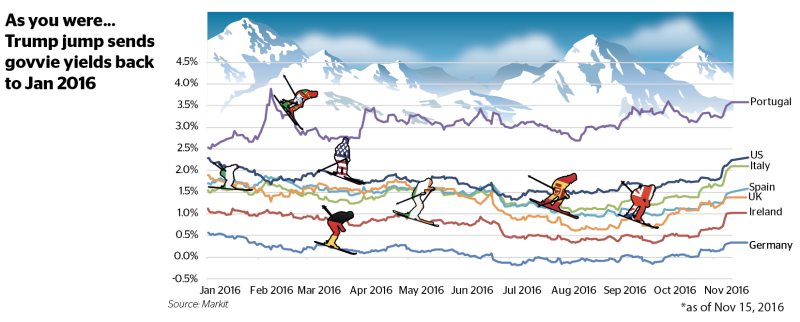
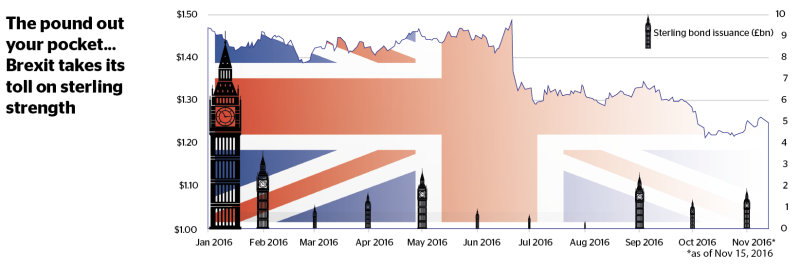
In a year where the unexpected became the norm, one of the few constants was the ECB’s presence in the eurozone sovereign bond market — you can see the monthly pace of Mario Draghi’s purchases. Elsewhere, the shock election of Donald Trump as US president and the Brexit vote took its toll on government bond yields and sterling’s level against the dollar.
Rising energy costs, inflation and interest rates may all sound a bit 2023 in the face of the latest fears about AI Armagaddon but this is what will drive the bond market for now
French covered bond trading levels have become increasingly divorced from OATs since the start of 2024, offering a golden opportunity to issuers ahead of a likely volatile period