South Asia
-
 The Securities and Exchange Board of India has put together a consultation paper for the public issuance of units of infrastructure investment trusts (InvITs), tackling topics ranging from filing an offer document to divvying up stock to potential investors.
 -
Tata Chemicals Europe's £140m ($216m) five year dual-tranche facility has received commitments from two banks and is set to wind up in January.
-
A $305m three year borrowing for Tata Power's subsidiary, Khopoli Investments, has received commitments from two banks, having been in general syndication since September.
-
Aditya Birla Group company UltraTech Cement has wound up a $365m dual-tranche refinancing with five lenders in the syndicate.
-
India's Azure Power Global is seeking approval to float on the New York Stock Exchange, having a filed a preliminary prospectus with the Securities and Exchange Commission on Wednesday.
-
A $200m equivalent borrowing for Yue Xiu Enterprises has been launched into syndication with one bank at the helm.
-
Indian hospital chain Narayana Hrudayalaya launched bookbuilding for its Rp6.13bn ($92m) IPO on Thursday, bagging the Singapore sovereign among its anchor investors.
-
Tata Motors has allocated its $600m dual-tranche refinancing among a group of 36 banks. The company split the amount evenly between a five year and a seven year despite the longer tenor seeing a higher volume of commitments.
-
Alkem Laboratories has priced its Rp13.5bn ($202.1m) IPO at the top end of its range, following a burst of demand for the Indian healthcare sector in the past month.
-
The Asian debt market has been buzzing about Masala bonds for months but the maiden deal from an Indian issuer — widely expected in the first week of December — is yet to materialise. The slow development of offshore rupee bonds, however, is a good thing for what could potentially be a big market in the future.
-
In November, at the headquarters of the London Stock Exchange, Global Capital/Asiamoney hosted a roundtable discussion with several leading industry participants about the Masala bond market and its likely development. The discussion took place in the immediate aftermath of prime minister Narendra Modi’s visit to London, which coincided with a commitment for as much as £1bn of new rupee issuance to be listed on the LSE, broadening the market from the early International Finance Corporation and other supranational issuance to the private sector. The rationale for an offshore rupee bond market is clear: India, and in particular the central bank, want to reduce India’s vulnerability to foreign currency borrowing, while also retaining — for the moment — capital controls. For investors, offshore rupee bonds offer an opportunity to gain exposure to the currency, the economy and, as the market matures, specific credits. But the new market will face challenges, some logistical, and others about fundamental questions of governance. How will the Masala bond market evolve?
-
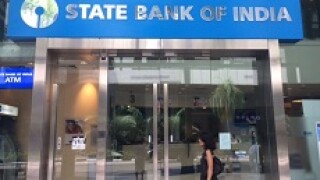
State Bank of India’s $500m loan has been allocated among 14 lenders, with signing scheduled for this week.