Asia Pacific
-
 The quantity of dim sum bonds has disappointed so far in 2012, but quality has not, say dealers.
 -
The HKMA is expected accelerate measures to improve liquidity in the offshore renminbi (CNH) market after the announcing two new developments which should aid the development of the repo market.
-
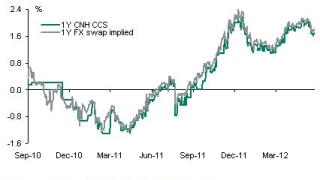
The Chinese currency has been imitating the movements of other Asian currencies since the beginning of the year in a reversal of recent trends, says the French bank.
-
The former HKMA head who has championed the island’s 29-year-old peg against the US dollar is now calling for a currency review. But change will be hard to come by for the foreseeable future.
-
Top 3 Offshore RMB DCM Transactions - 2012 YTD
-
Korea East-West Power will be on the road for four days next week to gauge demand for a $300m-$500m bond, the state-owned company’s first deal in the global debt market for almost seven years.
-
Korea Development Bank is planning to sell at least Rmb500m ($78.5m) of dim sum bonds this week — and now hopes to become a regular in the market after finding rising demand for renminbi loans from its clients.
-
Korea Development Bank is aiming to price its ¥30bn ($377m) Samurai bond before the end of the day, and has released price guidance pitching the deal at as much as 6bp inside a recent offering from Export-Import Bank of Korea (Kexim).
-
Caisse de Refinancement de l’Habitat launched the largest French covered bond in months when it tapped a 12 year trade for an impressive €750m on Wednesday. But despite evident domestic demand, follow on trades are likely to have to wait until after the Greek elections.
-
A large percentage of offshore renminbi bonds are unrated and covenant-light, leaving retail investors particularly exposed to potential bond defaults, according to the US asset management company.
-
Agricultural Development Bank of China (ADBC) is meeting investors to drum up demand for an offshore renminbi bond that will be worth as much as up to Rmb3bn ($471m). But some investors argue the bank will need to be pay up compared to its outstanding curve to ensure demand.