

Panellists:
Jesse Ang, resident representative, Philippines, International Finance Corp. (IFC)
Chong Van Nee, head of infrastructure and utilities ratings, RAM Rating Services
Timothy Hia, partner, Latham & Watkins
Noburu Kato, head of investment banking, Asia, SMBC
Boo Hock Khoo, vice president, operations, CGIF
Patrick Mispagel, associate managing director, infrastructure finance group, Moody's
Luis Juan B. Oreta, chief financial officer and treasurer, Manila Water
Frederic Thomas, senior investment specialist, infrastructure finance division 2, Asian Development Bank
Moderator: Matthew Thomas, contributing editor, Asiamoney
Asiamoney (AM): The position of project finance bonds in the Asean (Association of Southeast Asian Nations) region is clearly not as strong as it could be in relation to the loan market, and a lot of our discussion today will be about the role project finance bonds will be able to play in the future. But to put things into perspective first, can you give us a sense of quite how active the project finance bond market is at the moment?
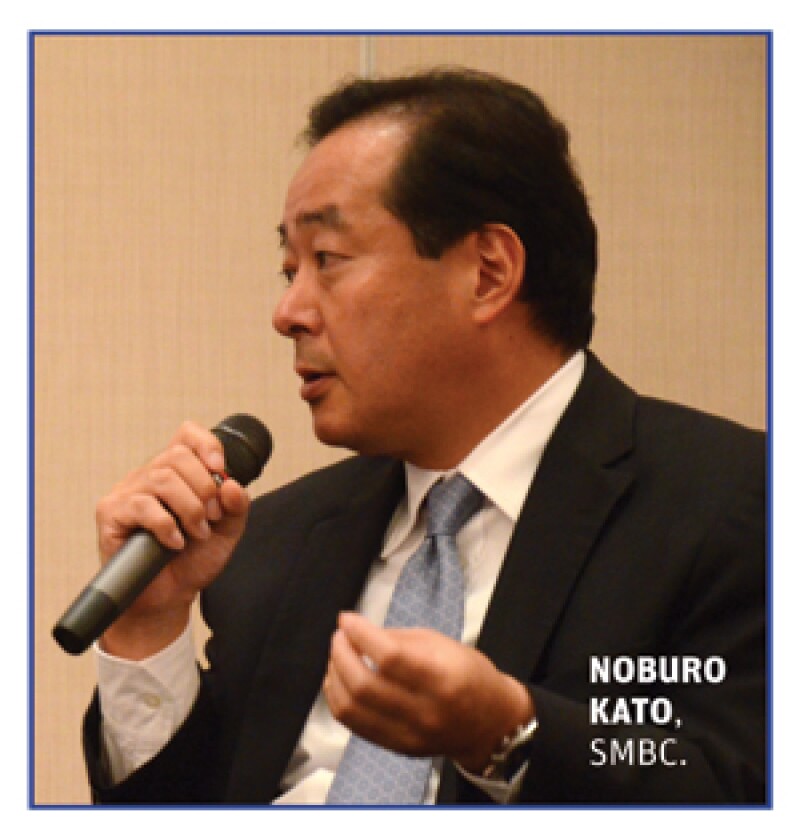
Noburu Kato, SMBC: The Asean project finance bond is relatively slow in terms of development when you compare it to Europe or the US. Projects are largely bank-funded at the moment, and we need to look at the example of other countries before we can develop the Philippine project finance bond market.
For instance, you can look at the example of India, which is very similar to the Philippines in the sense that local banks dominate. But nowadays, because India borrowers are facing a lot of constraints in terms of capacity, instead of going out to the capital market they are building senior debt funds that help fund projects. A quite a few Indian institutional investors are putting money into this type of fund. In India, this evolution take place in the form of funds — but why not project bonds if investors are comfortable with the risk? We would, however, require a growth of the institutional investor base first.
Timothy Hia, Latham & Watkins: There is a lot interest in how bonds can fit into the overall capital structure of a project financing deal. We're heard from institutional investors in the US and in the region as well about their interest in these types of instruments. A properly-structured project finance bond gives them something they can get involved in. But the bond needs to be of a large size, and the intercreditor arrangements need to be structured to allow the bondholders to exist alongside the bank lenders.
AM: Do we need multilateral institutions to step in in order to make project finance bonds a reality in this country?
Frederic Thomas, Asian Development Bank: There are two bond markets. There is the local bond market, where local investors still are unlikely to offer better pricing than liquidity-flushed local banks, realistically, their role is going to be refinancing. But there is also the market for overseas investors. These markets have been developing rapidly over the last year or so under the influence of the EIB (European Investment Bank).
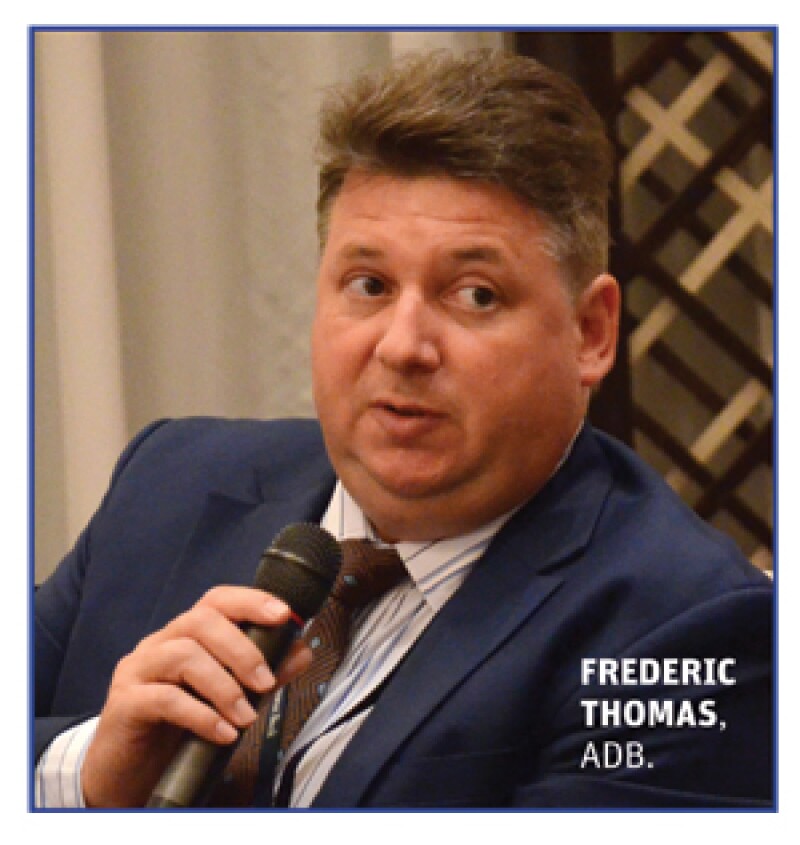
Insurance companies have been keen to get involved in this market, partly because of the attraction of long duration investments to them under Solvency II. But it would certainly help to get some kind of credit enhancement from a triple-A institution. Providing a first-loss piece is the way that EIB has been able to be very successful in Europe, and we are considering something similar in the Asian markets. We have been talking about this since March, and have made a lot of progress since then. We are looking at two or three prospects in 'BBB+' rated Thailand, and one prospect in the 'BBB' rated Philippines.
Jesse Ang, IFC: The dominance of local banks in the Philippines means they provide by far the largest share of project financing here. But we had situations in the past — for instance, in the 1990s when the Philippines developed the IPP programme — when we attracted 144A funding. That shows it is possible, but at this stage it is quite far away. If we're going to do project bonds in the Philippines that have some appeal to international investors, we need some sort of credit enhancement, we need some sort of stability in the regulatory environment and we need to see several projects going well in a particular sector.

One thing we're doing is looking to support local banks with risk-share facilities. The issue with local banks is that they have plenty of money, but they do need some risk mitigation, so doing a first-loss structure can help them come in to projects such as renewable energy projects. It is important to find the right way to mobilise local banks, especially when you're talking about sectors that multilaterals cannot get into because of the small size. This market will eventually evolve, but it will take time.
Thomas, ADB: I would like to share a little story. I was heading Deutsche Bank's operations for project finance in Spain in the early 2000s, and the market was very hot then, filled with bank liquidity. There was a set of road financing deals going around in Madrid, and the concessions were very long — in some cases 40 years or 45 years. We came up with the idea to sell staggered project finance bonds, because even if the traffic is not there, if you stretch out the maturity of the financing you can bring more resilience to a project. But when we talked to CFOs at sponsors, they asked: why should I worry? I can do an eight or 10 year bullets and banks will always be there for us. Then, of course, we hit the financial crisis in Europe in 2008, and their funding rates went up dramatically, and today they face default.
Long-term capital market funding gives you a way to fulfil the requirements of economics 101: matching your assets and liabilities. Refinancing risk is real and it does materialise on occasion like in my Spanish example, so project bonds offer a lot of value from that point of view.
AM: Do governments need to step up, at the very least to fill the that the viability gap that was talked about in the previous panel?
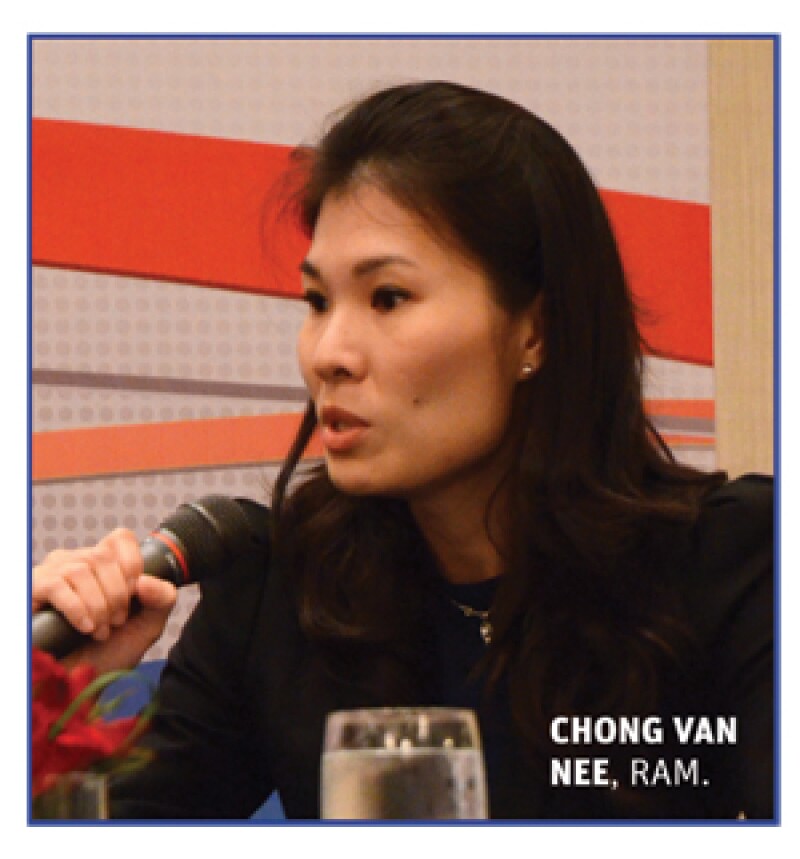
More recently, the government also established Danajamin Nasional Berhad, a government-owned monoline insurer, to provide financial guarantees for lower rated bonds, including project bonds. All these initiatives have filled the viability gap, which has been crucial to developing the project finance market in Malaysia. As the pioneer rating agency in Malaysia, RAM rated the first project finance bonds in 1993. Since then, project bonds have played a crucial role in successfully financing various economic and social infrastructure projects.
AM: To what extent is CGIF willing to come in as a guarantor of project finance bonds, which would mean longer maturities than you are used to at this point?
Boo Hock Khoo, CGIF: This is a key area of focus for us. As we go around the Asean region, we note that — with the exception of Malaysia — Asean bond markets do not have project bonds. The key discussion point for us here today should not be what is happening next year or the year after that; we should be setting the stage for what is going to happen 20 years from now. CGIF's role is not to guarantee every project bond that is going to be required in the Philippine market. Our role is more in trying to support the first non-recourse project bond, which we're trying to do here and in other markets. We are exploring some opportunities in the pipeline right now.
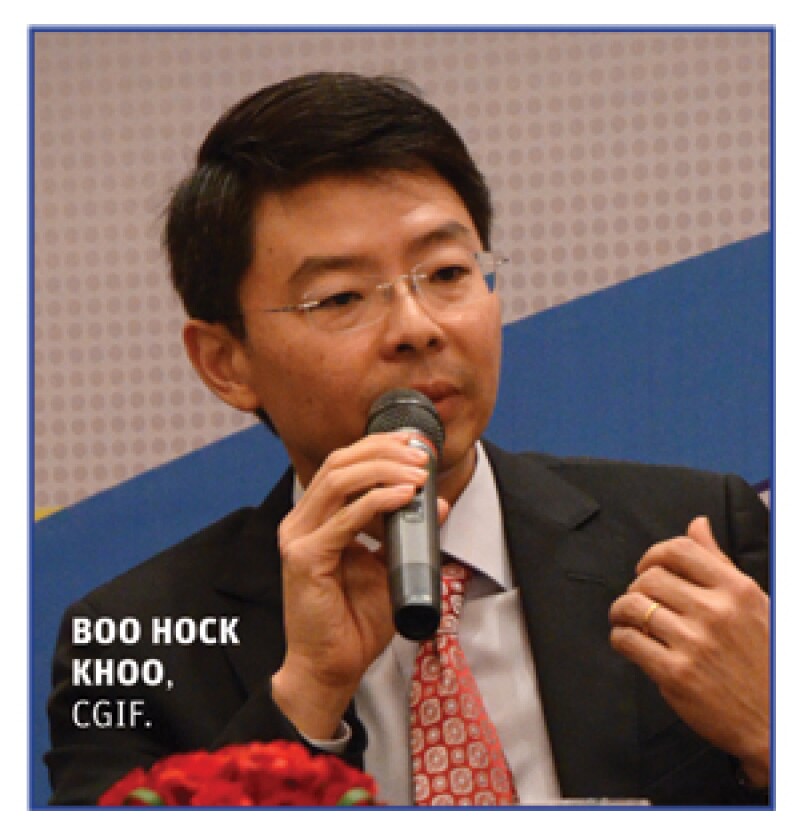
The role we need to play is to lead the market in the right direction. We may start with full guarantees, but ideally it should be some tranches guaranteed and some tranches sold on a stand alone basis. That will help local bond investors get more comfortable with the project risk, while at the same time having the benefit of CGIF’s evaluation, structuring and support for the project. There are very unique structuring challenges to a non-recourse project bond which differ from normal corporate bonds of project owners. The first step it is about trying to get well-structured bonds from good projects to start the market off. From there, you can move to riskier bonds that are still backed by good projects. The one thing you can never have are bad projects, because even the well structured bonds will not save you at that point.
Our vision is to one day see the market flooded with bond investors really looking to buy non-recourse project bonds to fulfil the infrastructure financing needs of the Philippines, which at this point are tremendous. When you have that sort of support from bond investors available, the equity guys and project sponsors will come to the Philippines quite easily.
AM: Manila Water has clearly explored different funding options for its projects, but you have so far decided not to issue project bonds. What has held you back?
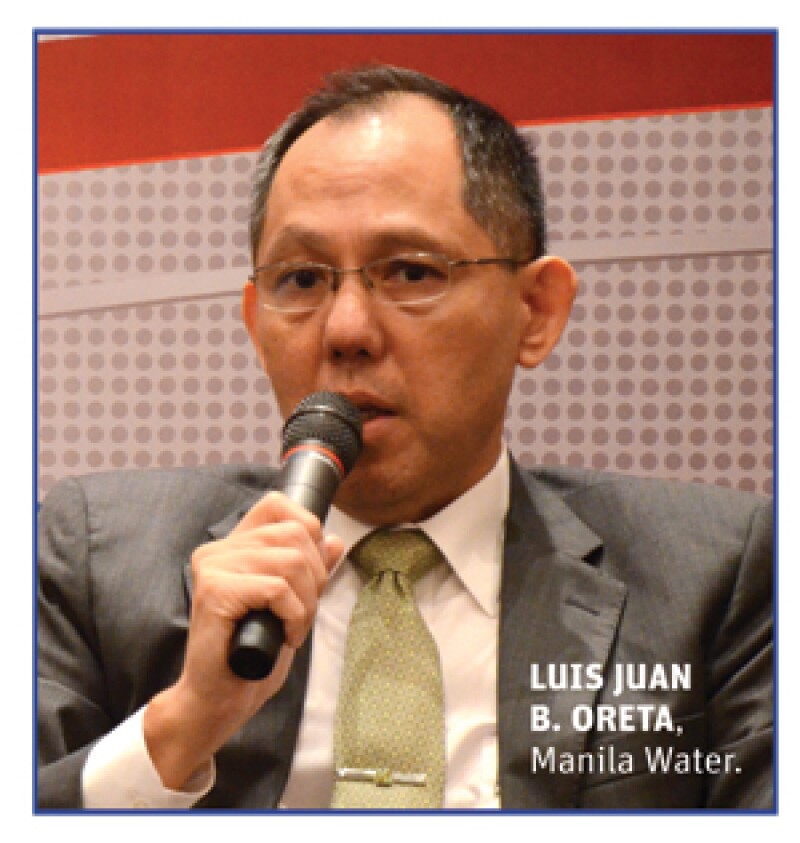
The key for us as a PPP is the strength of the contract we have with the government. It is central to any lender that they are comfortable with the contractual obligations of our counterparty, and so far that has not only held but has proved strong enough to make lenders very comfortable with us. That has really been the strength of our relationship with bankers.
AM: Because you're a PPP, you're also able to benefit from the waiver on single borrower limits for banks.
Oreta, Manila Water: That's right. There is a central bank circular which exempts PPP projects from the single borrower limit, but that is not automatic. You have to work for it, with each and every bank. We have been successful in having at least one of our banks work with us to get that exemption, but this is not something all banks can expect to happen easily. The circular will be in effect only up until 2016, so until then we are certainly going to try to make the most of this.
AM: Moving on to a slightly more hypothetical discussion, but certainly an important one for the future: how should project finance bonds be structured in the Philippines to ensure they get the broadest possible demand?
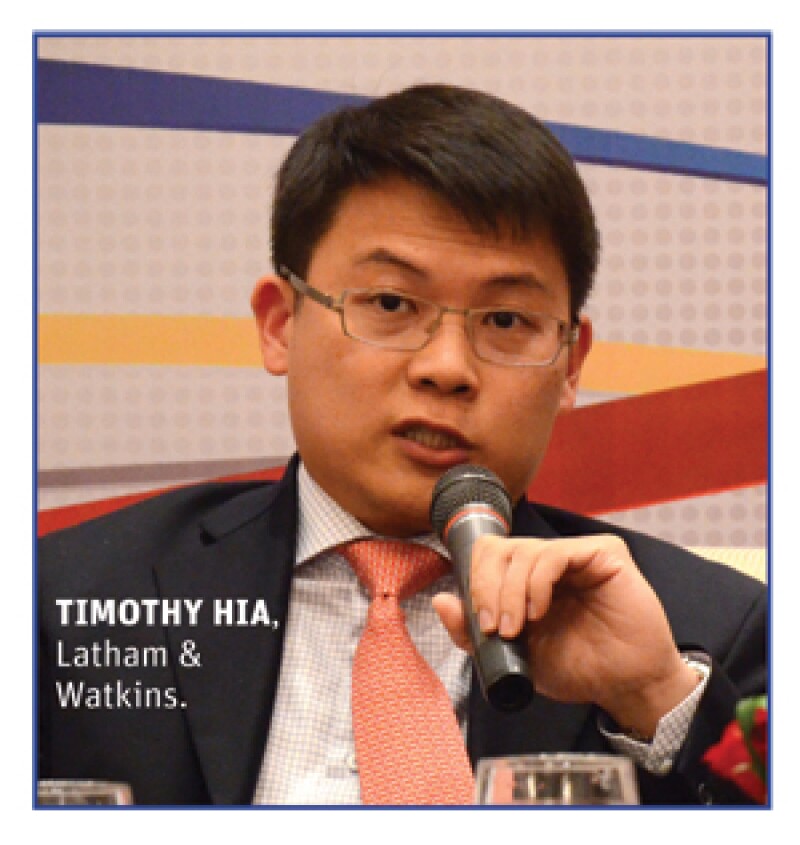
Hia, Latham & Watkins: There are a number of things that need to be done, if you take a look at project finance bonds that have been successful in overseas markets. For one thing, the bond piece has to coexist with the loan piece. I don't think commercial bank lenders are going away any time soon. To give you an example, the Studio City construction in Macau was privately financed, and you had $825m of bonds sitting alongside more than $1bn of bank debt, with the bank lenders taking a significant role in the administration of the overall credit, the review and understanding of the construction risk, and also just appointing technical advisers to assist with the day-to-day administration of the structure. If you really want to structure an international greenfield project bond, you need something along those lines.
One of the key hurdles that has already been mentioned in passing here is pricing, in particular whether project finance bonds can be competitive in a landscape where low-margin bank loans are available in a large enough size to fund many of the projects out there right now.
Mispagel, Moody's: It's worth pointing out that structure doesn't address every risk from a credit perspective. We do look at structure, but ultimately the fundamentals of the project, including the regulatory environment, are far and away the overriding concern. Even when you have credit enhancement, you cannot just rely on the wrap; you need to understand the underlying risk as well.
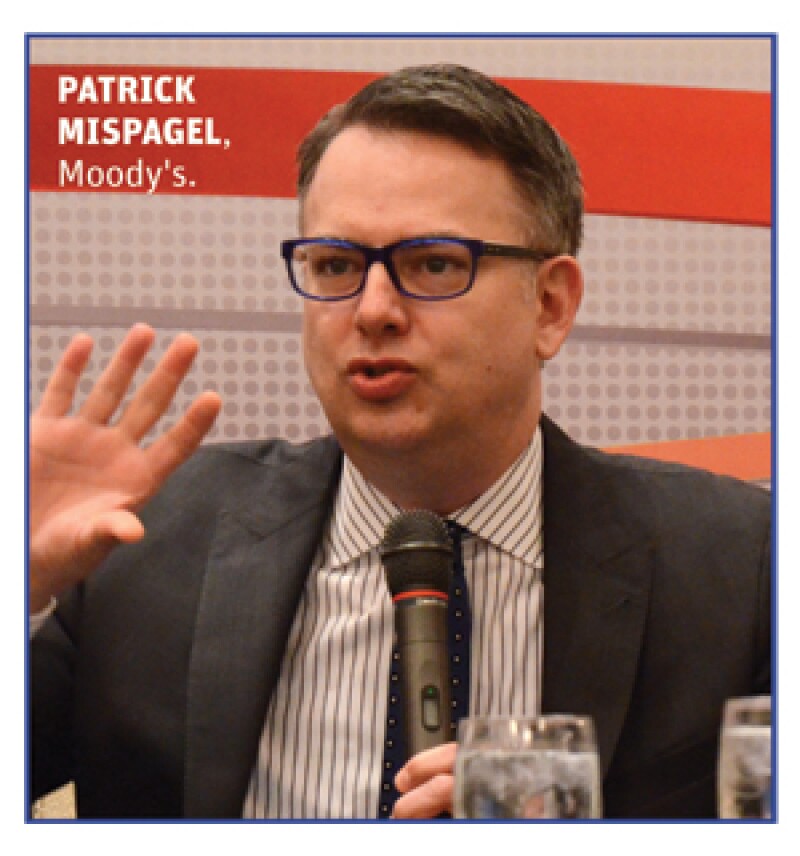
When we're talking about project finance bonds for offshore investors, you have investors that struggle to understand the intricacies of each individual market — and each project itself has its own idiosyncrasies. The growth of the project bond market here is going to be incremental, most likely starting with brownfield investments, and with each early deal really subject to investors getting to grips with the hurdles to understanding each sector and each deal.
Chong, RAM: Structures aside, there need to be a pipeline of viable projects with established sponsors to garner demand for project finance bonds. While project bonds are meant to be structured on a non-recourse basis, having an established sponsor with long-term commitment and ownership provides comfort to investors. Established sponsors are also likely to employ reputable counterparties, such as contractors and operators, which play a big part in a project’s long-term viability.
AM: What other hurdles do you see to developing the project finance bond market for Philippine sponsors?
Kato, SMBC: When people talk about project finance, we tend to talk about finding sources of additional liquidity coming in, or we talk about banks having constraints from Basel III, but we don't discuss anything about how the borrower or the sponsors view project bonds. This is something we need to consider. The lesson learned from past experience was that there is no way for sponsors and borrowers to renegotiate terms and conditions with bond investors, where of course they can do this with bank lenders. There should be some mechanism to allow sponsors to negotiate with bond investors.
Thomas, ADB: This is certainly an issue, which is why it makes sense to look at brownfield refinancing for bonds rather than greenfield projects. But there have been a few interesting developments in Europe with the emergence of, one, boutique firms that act as coordinators on behalf of bondholders during the construction phase and, two, strong investors who take large positions, and when you get that, negotiating with your investors is a lot easier. Sometimes, you essentially have to deal with a single or couple of investors. This is not going to be necessarily an everyday situation, but there is certainly a trend of dedicated ex-monoliners having been recruited by large insurers to take large chunks of bonds.
Oreta, Manila Water: We have never had the experience of re-negotiating our terms, and we hope to never have the experience. But it is true that it is much easier for borrowers to keep an open line with their bank lenders than it is with bond investors. It is much better to have a discussion with institutional lenders than to deal with thousands of retail creditors. For that and other reasons, the use of project bonds will probably be the last thing we will use to fund our capex.
One can always ask for better conditions in a market but the conditions right now are a lot better than they were five years ago. You couldn't get a bullet 10 year deal done in this country five years ago; now you can, and sometimes you can even go out to 20 years. The market is improving. It is going to take some time to reach the levels we're seeing in other countries, but right now, there is enough liquidity in the system to absorb our financing needs.
AM: How much does currency risk limit the extent to which Philippine projects can be funded offshore?
Khoo, CGIF: Projects should be funded in the currency in which you're earning. If you're going into Indonesia, for example, you should be raising rupiah. The key consideration with projects is not just whether the sponsor is strong, but whether the project can really stand on its own. It is a different story for corporates when we talk about tapping different bond investors; for projects, you really need to have a good understanding of a specific project and see if it makes sense. The equity portion is not really an issue; the issue is finding the 80% debt portion of a project properly funded in the right currency. We want to see project financing raised in appropriate currencies, because that increases the ability of a project to stand on its own since it materially reduces the risks to a project.
AM: From IFC's perspective, how do Philippine project finance deals compare to others in the Asean region?
Ang, IFC: Interestingly enough, in terms of all the East Asian countries, the Philippines is the largest part of our infrastructure portfolio. If you talk about power, the Philippines is the second largest, next to India. I think while we lament the fact that Philippine infrastructure needs have a long way to go, there are opportunities out there. These opportunities will continue to be there, provided you understand the risk and you understand the projects themselves.
The situation is not the best here but we are starting to see more investments in the power sector, in particular. There are certainly opportunities — and my view is that we will get to the point where Philippine companies are selling project finance bonds. For this to happen, the regulatory regime needs to stabilise. We need to make sense of how decisions are made by the regulators.
This is a market that provides opportunities; it is all a question of how you look at things. If you want to look at opportunities in the private sector, this is the place to be. Other countries have not really figured out that you need the private sector yet, and the Philippines made that decision a lot time ago. It will take time, but the bonds will eventually come.