

At a time when Europe has been left reeling by Britain’s shock decision to leave the EU, leading politicians and regulators in eastern Europe are warning Brussels that it risks alienating members, and needs to fundamentally reassess its priorities. With prime minister Teresa May confirming March 2017 as the start of Britain’s exit process, and Hungary voting last week to reject the EU migrant resettlement plan, dissent in the ranks is growing.
While economists suggest that both the Czech Republic and Poland have a lot to lose if the EU adopts a hard-line approach and imposes a painful exit on Britain, the finance ministers of both countries had a certain degree of sympathy for the UK.
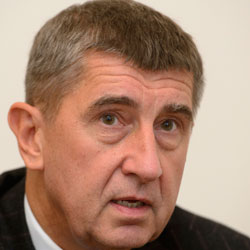
“I have a lot of understanding and sympathy for the many UK citizens who voted for ‘Brexit’,” Andrej Babiš, finance minister of the Czech Republic told GlobalMarkets. “That vote sent a very important signal to Brussels, in that the European Union needs to be reformed and needs to be reformed quickly.”
Babiš echoed many Britons’ concerns that regaining control over EU immigration was a priority though he believes that immigration quotas in Europe definitely will not work.
He said that Article 50 would have to keep in place the four freedoms of the EU — goods, services, capital and people — that Europe considers inviolate. “We cannot and Brussels cannot move on that,” he said.
“We need to become more protective, not less protective, of the region. We need the Schengen agreement in place, but we also need to close our borders and ensure that we regain control over who can come in and who cannot.”
BROKEN SYSTEM
For Piotr Nowak, Poland’s deputy finance minister, Brexit is symptom of a broken system, evidence of the fact that the “current structure cannot hold”. He lambasted the European Union for interfering in the ideology of its member countries, and losing sight of its role as arbiter of the economy.
“If you’re talking about economy and legislation, and improving the standards of institutions, we are in favour of that,” he said. “But some fundamental way of thinking has to be changed, and we should start talking about changing the EU treaty. The EU has gone one or two steps too far. The EC would like to have an impact on the way of thinking in particular countries, but this is too much.”
The EU needs to take these challenges seriously, said Peter Kinsella, chief EM economist at Commerzbank in London, although he noted that the CEE region had benefited enormously from EU membership. “The EU needs a more streamlined decision-making system and they’re verging too close to federalism rather than taking an inter-government approach.”
Nowak warned that the EU’s move to interfere in Poland was detracting from the important issues it should be tackling. He referred specifically to the EC’s move to send Poland an official warning that changes to its constitutional court could endanger the rule of law. Nowak said that was a step too far. “They don’t know our law and that is the problem, this is how we are running our country,” he said.
Instead the focus should be on tackling issues like youth employment, and the real economy. “There is a real issue for young people trying to get a job, and we are afraid of that, but nothing is being done.”