

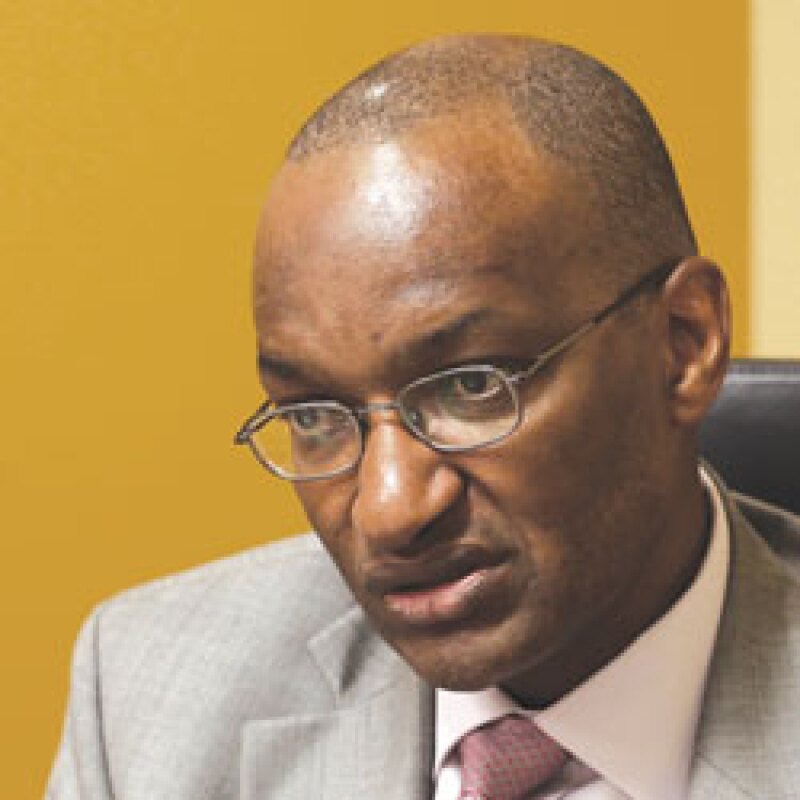
Bitcoin and other virtual currencies, though viewed by some as the forefront of exciting developments in financial technology, should be considered a threat to the financial sector, Kenya’s central bank governor Patrick Njoroge has said.
In a scathing indictment, Njoroge told Emerging Markets these new currencies had to be stamped out. “You’d be out of your mind to allow Bitcoin,” he said.
Njoroge pointed to profound vulnerabilities in the system. “Recently there have been occasions where there was hacking of Bitcoin. That was one of the selling points — that it could not be hacked. And boom, this happened.” In August, Bitcoin exchange Bitfinex reportedly lost $65m as a result of a hack — the latest in a long series of such incidents.
“Secondly, the Bitcoin history is chequered,” Njoroge said. “It was used by various actors to hide their illicit transactions.” Among other, more conventional uses, Bitcoin is regularly used to gamble, as well as buy drugs and sex work.
To Njoroge, the illicit uses of the crypto-currency, and the system’s weakness, are reason enough to exclude it from widespread use: “Put this together, and you realise that, actually, we may start off something [if we allow Bitcoin] which may end up bringing down the rest of the financial system.
“All you need is one mistake,” he adds, pointing to the risks of financial loss if Bitcoin were allowed, only to be followed by a major security breach.
The identity of Bitcoin’s creator is still unknown, and the currency has no management to deal with whatever issues may occur — only an algorithm. Of this business without a face, Njoroge said: “You can’t trust people you don’t know.”
He is aware that the regulator would likely bear the brunt of the fallout from a Bitcoin disaster: “If you are an investor, frankly you don’t care much about the risk. You believe that somebody else will take up the risk, i.e. the central bank.”
Both Mark Carney of the Bank of England and Janet Yellen of the US Federal Reserve have expressed interest in Bitcoin and the underlying technology, blockchain. In June, Yellen encouraged central bankers around the world to pay more attention to these new financial technologies.
One way blockchain might serve Kenya specifically, Njoroge said, is if it were put to use to create a national, secure registry of all loan securities.
“We are not Luddites,” said Njoroge, who became governor last year, after 20 years spent at the IMF. “We know technology is good for us. Technology can resolve a lot of problems.”Njoroge said such technologies might work for economies larger than Kenya’s, but he said: “For them, the risks might be smaller, because they’re much bigger, they have deeper markets and so forth. It’s one thing to test this particular technology in England, it’s another to test it in Kenya.”