
 |
The central bank took centre stage in stabilizing the economy in the face of crisis – first financial, then political The last thing a country with sluggish growth, deep structural ills and a debt problem needs is a fight between its two key economic players.
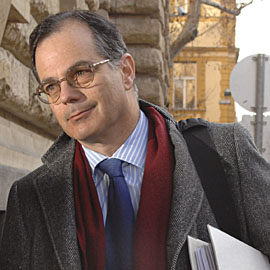
But that is what Hungary has had since April, when a new prime minister took power promising to sack András Simor, governor of the Hungarian National Bank, despite constitutional provisions guaranteeing central bank independence.
On taking office, Viktor Orbán, leader of the socially conservative but economically populist Fidesz party, dismissed Simor as an “offshore knight”, referring to the tax-sheltered investments Simor held in Cyprus – something even close former colleagues regard as unusual. “We want to be proud of our national institutions,” Orban said.
But Simor, who has won Emerging Markets’ award for central bank governor of the year for emerging Europe, refused to go. The European Central Bank, which has influence over EU members’ central bank legislation, considered the move an attack on central bank independence, and blocked attempts to remove Simor or force him to take a pay cut, leaving Hungary in the impasse it is in today.
Relations were not always frosty. In the early 2000s Simor, then head of the Budapest Stock Exchange, served on Orbán’s panel of economic advisers. “They would happily sit at the same table together,” remembers one banker.
But conflicts between the central bank and the government are nothing new in Hungary. Zsigmond Járai, Simor’s predecessor, was the target of unsuccessful attempts by the previous Socialist government to oust him. And Simor, who preaches a fiscal conservatism that sat well with Gordon Bajnai, Orbán’s technocratic predecessor, is sure to be at odds with a government that wants to use fiscal stimulus to restore Hungary’s growth.
Simor intends to serve out his mandate, which lasts until 2013. “I need to show the politicians that the central bank independence is sacrosanct. It’s important not for me but for the future of central banking in our country.”
He is also proud of the central bank’s role in stabilizing the economy when the credit crunch drove Hungary to the IMF and the EU for support in 2008.
“We reacted very fast – extending Hungarian forint and foreign exchange liquidity, stabilizing bank liquidity,” he says. “Hungary was perceived as the next Iceland in October 2008 – and what we achieved in the year after that was a positive example, and the central bank had a part to play in that.”
Moreover, despite the massive volatility of the forint over the past year in face of the economic and political headwinds, market confidence in the central bank has helped to forestall yet further sell-offs in the currency, say analysts.
But the landscape is very different since Fidesz’s landslide victory in April.“It is difficult to judge where we agree on policy, because there aren’t any discussions about that with the government,” he says.
But while Simor is proud of the country’s achievement in bringing the budget deficit down from over 10% to 4.5% between 2006 and 2008, the government is worried about the political and social price of austerity – preferring to levy a $1 billion bank tax, for example, rather than leave taxes at their current high levels.
With so much uncertainty and so little agreement, Hungary will need more than a dose of luck to pick a safe economic path over coming years.