Latest news
Latest news

ABS market not the cheapest cost of financing for issuer of first ever trade in the asset class

Revival of high LTV mortgage lending is creating an opportunity for more SRT and deconsolidation transactions

Trade follows the end of a joint venture to originate loans






More articles
More articles
-
 Covered bond investors had a rare opportunity to buy higher yielding debt this week with a trio of transactions offered across the credit spectrum from sub-investment grade to triple-A.
 -
Residential rooftop solar finance company Mosaic is in the market with its second ABS offering of 2017, nearly four months after the company originally filed documents for the deal with the US Securities and Exchange Commission in June.
-
Online lender Marlette Funding is marketing a securitization this week, as the wider marketplace lending industry gears up for an important fourth quarter.
-
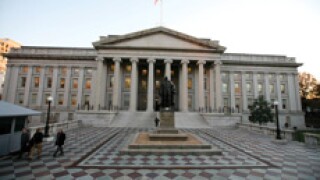
A US Treasury report on capital markets, published on Friday, struck a populist tone, saying the rise of private credit at the expense of public market sources of financing has snatched money-making opportunities away from average Americans. But it is investment banking that has most to gain from a boost to public debt markets, not individual investors.
-
As the industry continues to mature, marketplace lenders should drop their gimmicks and sell themselves on their underwriting records.
-
An Italian consumer ABS transaction was priced at a negative yield on Tuesday, as euro ABS buyers continue to deal with a tightening market with no end to the trend in sight.
-
Panellists at LendIt Europe on Monday said that there may be more to Europe’s marketplace loan ABS market than meets the eye, with a number of platforms issuing deals under the radar.
-
Residential and commercial Property Assessed Clean Energy (PACE) firm Renew Financial has tapped Barclays and Morgan Stanley for the first time as managers for its latest residential PACE transaction, in addition to repeat bookrunner Natixis.
-
A capital markets report from the US Treasury said that post-crisis regulation has hindered the US securitization market, and proposes a set of regulatory tweaks largely not requiring Congressional involvement to ease the burden on market participants.