

The UK government has lent its voice to the growing current of international opinion that expansive monetary policy has gone far enough, and may even be harming growth. Britain is set to embark on a fiscal stimulus, likely to be welcomed by financial markets.
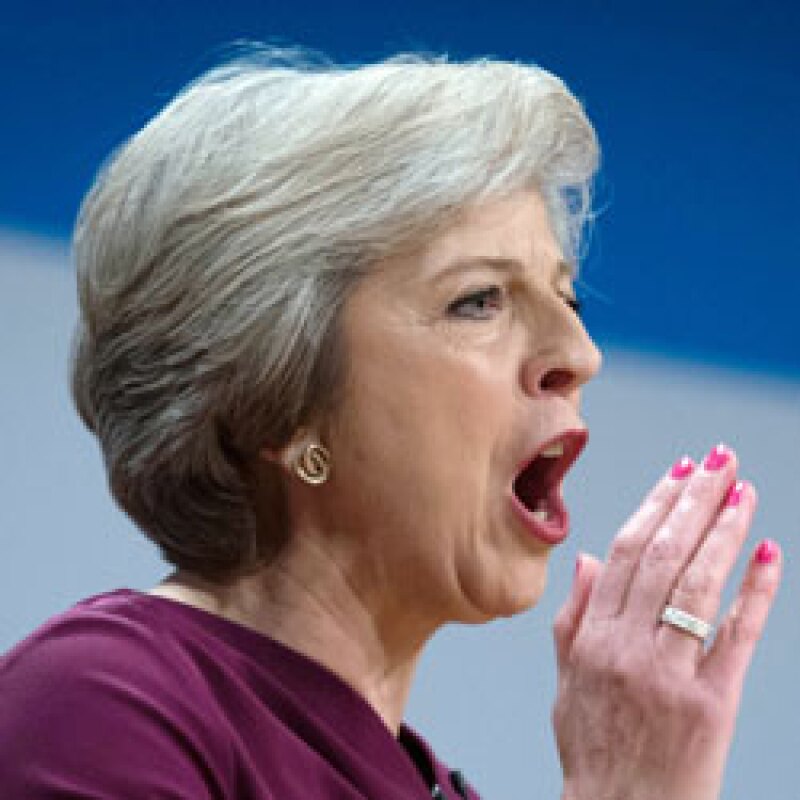
The strongest remarks came from Theresa May, UK prime minister, in her key address to the Conservative Party conference on Wednesday. She even appeared to indicate that UK monetary policy was about to change — despite monetary policy being the domain of the Bank of England.
While many financial specialists would welcome a more proactive fiscal policy, most would be alarmed by any suggestion of politicians gaining more influence over monetary policy.
May said “monetary policy — with super-low interest rates and quantitative easing — provided the necessary emergency medicine after the financial crash”. But she added that it had had “bad side effects”.
Rather than reaffirm the Bank of England’s right to set monetary policy, she said: “A change has got to come. And we are going to deliver it. Because that’s what a Conservative government can do.”
As speculation rose of a radical shift in policy, the government rushed to quell talk it would remove the bank's independence. George Freeman, chair of the prime minister's policy board said May was expressing unhappiness with previous Chancellor George Osborne's reliance on monetary policy. He said she supported Bank independence on monetary policy.
POTSHOTS AT BANKS
Politicians around the world have become much readier to criticise central banks since the financial crisis, when they moved into unconventional measures that have had profound effects on financial flows, with consequences for the wealth of different economic groups.
In the US Congress, where acts in 1977 and 1978 gave the Federal Reserve de facto control of monetary policy, there have been moves in the past two years to ‘Audit the Fed’. This means imposing closer Congressional scrutiny, which Fed chair Janet Yellen has said would “bring short term political pressures to bear” on the Fed and “politicise monetary policy”.
“I doubt very much that the Bank of England would have its independence taken away by this Conservative government,” said Kallum Pickering, senior UK economist at Berenberg in London. “There is a host of academic research which supports monetary independence. Monetary policy is conducted much better by independent central bankers than by [government] policy makers. Among modern, highly developed economies with large financial systems, Britain would certainly be an outlier if it took away the Bank’s independence. It would be a real step backwards in terms of taking a modern approach to monetary policy.”
INDEPENDENCE VITAL
Stanley Fischer, vice-chairman of the Fed, used a speech in November 2015 to argue that monetary policy independence “remains of the highest importance” after the financial crisis, when central banks’ focus had shifted somewhat from controlling inflation to preserving financial stability. He also emphasised that all major independent central banks are subject to political accountability regimes.
If the Bank of England’s independence is safe for now, the UK government clearly believes government action is needed to power growth.