

Advanced economies in Europe have rebuffed the call by the head of the International Monetary Fund, Christine Lagarde, for a co-ordinated switch towards fiscal policy and away from relying on unconventional monetary policy at the annual meetings this week.
Lagarde used a series of speeches and an interview with GlobalMarkets to urge ministers to embark on a three-pronged approach, which includes monetary policy, fiscal policy and structural reforms. “What is key is now action. So, my message to the members of the IMF tomorrow will be action, please,” she said this week.
But both the European Commission, which sets rules for members’ fiscal deficits, and the UK, which is nursing significant public debts and deficits, have pushed back a co-ordinated approach to a fiscal “reset”.
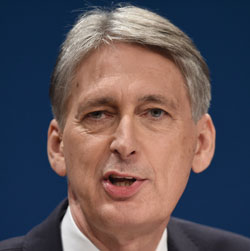
British Chancellor Philip Hammond has abandoned a target to produce a balanced budget by 2020 and told GlobalMarkets yesterday he would decide at a financial statement scheduled for November 23 whether to unveil fiscal stimulus policies.
But he added: “We have not done anything yet but are talking about putting in place a new framework in November that will give us some limited space — and it has to be limited because we have a high debt to GDP ratio — for carefully targeted fiscal interventions.
“The room that different countries for any kind of fiscal expansion differs very significantly and we are not like the countries with scope for huge fiscal expansion. At the discussions we have had at the IMF meetings it was clear that different countries had different abilities to respond to that suggestion by the IMF — and the IMF acknowledges that.”
‘AWASH WITH LIQUIDITY’
Pierre Moscovici, European Commissioner for Economic and Financial Affairs, also played down talk of a co-ordinated fiscal push. “Today the EU’s contribution to growth in terms of public finances is appropriate,” he told GlobalMarkets.
Some bankers and investors were worried extra government spending would not be well directed. Paul Tregidgo, vice-chairman of debt capital markets at Credit Suisse, said the world was “awash in liquidity”.
“My worry is not that there is too much borrowing — it’s that we’re not using these borrowing conditions to make the most of a historic opportunity to attack the key issues: infrastructure, education, environment. Maybe it is time to be bold.”
Stephen Lewis, chief economist at financial brokerage ADM ISI, said the costs of fiscal stimulus currently looked low but added: “It may appear that governments have the chance to enjoy a free lunch. This will encourage finance ministers to overlook, for the time being, theoretical arguments that fiscal policy has no long-run impact on GDP.
“But the costs of fiscal stimulus are likely to become steeper, if ever interest rates rise and government debt has to be rolled over. The heightened sensitivity of government spending to changes in interest rates… might add to economic instability.”
But Mark Mobius, head of emerging markets at Franklin Templeton Investments, backed Lagarde’s call, saying central banks were in a “really tight spot”. “They’ve being asked to create economic growth and they’re not qualified to do this,” he said. “The focus needs to be on fiscal rather than monetary policy.”