

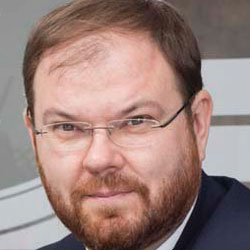
The clean-up of Moldova’s troubled banking sector is on track and sales of stakes in the country’s largest lenders could be completed before the end of the year, central bank governor Sergiu Cioclea told Global Markets. “We are in discussions with potential investors and I am more confident today that sales of stakes in two or three banks can be achieved this year,” said Cioclea.
On offer are 40% of Moldova Agroindbank (MAIB) and 63% of Moldindconbank. The current holders of both stakes have had their voting rights suspended and been ordered to dispose of their shares by the National Bank of Moldova (NBM) based on evidence of working in concert.
Moldinconbank has also been taken under temporary administration by the central bank.
Several European Union-based banking groups are reported to be interested in Moldindconbank, while MAIB is expected to attract private equity interest.
The sales are part of a wider overhaul of Moldova’s banking sector in the wake of a 2014 fraud that drained $1bn — equivalent to more than 10% of the country’s GDP — from the system.
The three banks at the centre of the fraud — Banca de Economii, Unibank and Banca Sociala — were shuttered in 2016. Concerns around governance and non-transparent shareholdings also resulted in MAIB, Moldinconbank and Victoriabank being put under central bank supervision.
The fraud also cost Cioclea’s predecessor, Dorin Dragutanu, his job. The former central bank governor resigned in September 2015 following popular protests against his handling of the crisis.
STOLEN ASSETS
Cioclea, a former BNP Paribas banker, took office in April 2016 with a mandate to clean up the banking sector. One of his first achievements was to put together a reform plan for the IMF, which convinced the Fund to approve a $179m support package for Moldova in November.
The last condition for unlocking the second tranche of IMF funding, the establishment of a central securities depository, was approved by Moldova’s parliament in April.
Meanwhile, Moldovan authorities are also moving ahead with attempts to recover some of the $1bn stolen in 2014. In April, the NBM published the results of a fourth report by US investigators Kroll into the fraud.
A young Moldovan businessman, Ilan Shor, has been named as the main instigator of the scheme. Funds from the theft have been traced to multiple jurisdictions, including Cyprus ($63m), China and Hong Kong ($61m) and Switzerland ($23m).
Around $200m also passed through two banks in Latvia, which has also undertaken a major clean up of its banking sector over the past two years to address recurring issues with money-laundering.
The NBM has this year signed a memorandum of understanding with the Central Bank of Cyprus to pursue funds located in the jurisdiction. No concrete results have been reported as yet, however.
“The social demand to recover stolen funds and punish those guilty continues to be huge,” said Cioclea. “Authorities will decide about legal actions soon.”